

Why a Sewer Scope Inspection Could Save You $25,000
When buying a home, most buyers focus on the roof, foundation, furnace, and electrical system.
But there's one major component that often gets overlooked because you can't see it:
The underground sewer line.
A sewer line may appear to be working perfectly during a showing. Toilets flush, sinks drain, and everything seems normal. Unfortunately, serious defects can exist underground without any obvious warning signs.
Repairing or replacing a damaged sewer line can cost thousands—or in some cases more than $25,000 depending on the depth of the pipe, landscaping, driveways, sidewalks, and municipal requirements.
That's why a sewer scope inspection is one of the smartest investments a homebuyer can make.
What Is a Sewer Scope Inspection?
A sewer scope inspection uses a specialized waterproof camera that's inserted into the home's main sewer line.
The camera allows the inspector to evaluate the condition of the underground piping from the house to the municipal connection (or septic tank), identifying problems that simply can't be seen during a standard home inspection.
Because the sewer line is buried underground, it's outside the scope of a traditional visual home inspection unless a sewer scope is specifically performed.
Four Common Sewer Problems I Look For
1. Root Intrusion
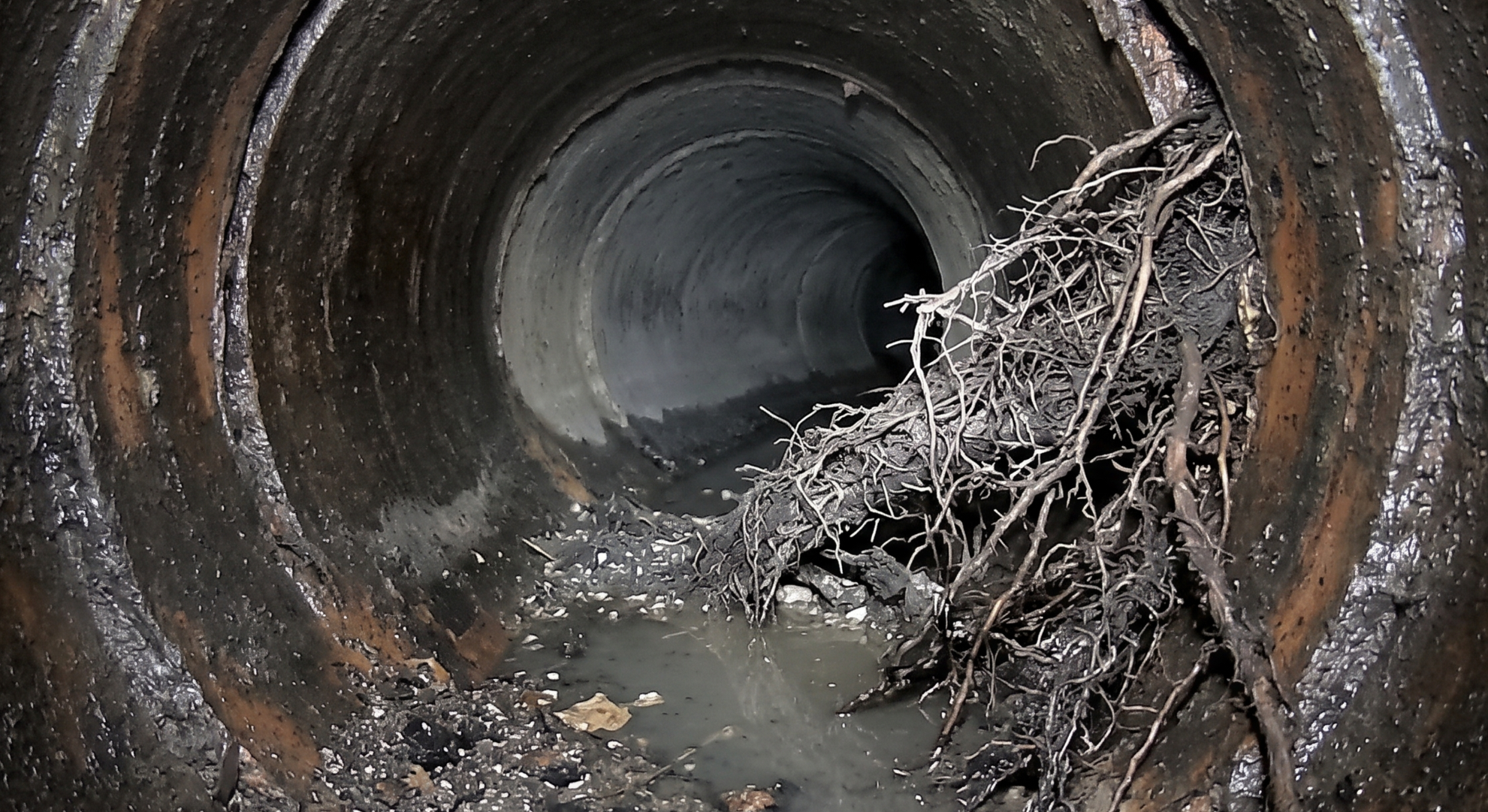
Tree roots naturally seek moisture.
Even a tiny crack or loose joint can allow roots to enter a sewer pipe. Once inside, they continue growing, eventually restricting or completely blocking wastewater flow.
Common symptoms include:
Slow drains
Frequent backups
Gurgling toilets
Sewage backups
If left untreated, root intrusion can crack or collapse the pipe entirely.
2. Offset Joints
Over time, sections of sewer pipe can shift due to soil movement, settlement, or improper installation.
When two sections no longer line up correctly, wastewater catches on the edge of the pipe instead of flowing smoothly.
An offset joint can:
Catch toilet paper
Trap debris
Increase the likelihood of recurring clogs
Accelerate pipe deterioration
These issues usually develop gradually, making them difficult to detect without a camera inspection.
3. Pipe Bellies
A "belly" occurs when part of the sewer pipe settles lower than the surrounding sections.
Instead of wastewater flowing continuously toward the sewer main, water collects in the low spot.
Standing water can allow solids to accumulate, eventually creating recurring blockages.
While a small amount of standing water may not immediately require replacement, significant bellies can become expensive repairs if they begin causing frequent backups.
4. Cracked or Collapsed Sewer Lines
This is the defect every homebuyer hopes never to find.
Older clay, cast iron, Orangeburg, or damaged PVC sewer lines can crack, separate, or collapse entirely.
A collapsed sewer line often requires excavation to repair or replace the damaged section—and in some cases, the entire sewer lateral.
Depending on factors such as depth, accessibility, landscaping, concrete removal, and municipal requirements, repairs can cost many thousands of dollars.
"Everything Drains Fine" Doesn't Mean the Sewer Line Is Healthy
One of the biggest misconceptions I hear is:
"The toilets flushed, so the sewer must be fine."
Unfortunately, that's not always true.
Many sewer defects develop slowly over time.
A partially blocked pipe may still drain normally during a home showing, yet begin backing up shortly after you move in.
The only way to truly evaluate the condition of the underground sewer lateral is with a sewer scope inspection.
Why Older Homes Aren't the Only Ones at Risk
While older homes often have aging clay or cast iron sewer pipes, newer homes aren't immune.
I've seen newer sewer lines with:
Construction debris left inside the pipe
Improper installation
Separated joints
Settlement
Damage from heavy construction equipment
Age alone doesn't determine the condition of a sewer line.
Why I Recommend a Sewer Scope Inspection
A sewer scope inspection takes only a short time to perform, but it can reveal defects that could otherwise remain hidden until after closing.
When performed alongside a home inspection, it provides valuable information about one of the home's most expensive underground systems.
Finding a problem before you buy gives you the opportunity to:
Negotiate repairs with the seller
Request a credit toward repairs
Budget for future maintenance
Avoid an unexpected sewer emergency after moving in
Protect Your Investment Before You Buy
At Foundation First Home Inspections, I offer sewer scope inspections using specialized inspection equipment to evaluate the condition of the home's main sewer line before you close.
Whether you're buying a home in Algonquin, Crystal Lake, Cary, Huntley, Lake in the Hills, McHenry, Elgin, Barrington, West Dundee, or the surrounding northwest Chicago suburbs, a sewer scope inspection can provide peace of mind and help uncover hidden defects before they become your responsibility.
When you're investing hundreds of thousands of dollars in a home, spending a little extra to inspect one of its most expensive hidden systems is often money well spent.
The sewer line may be out of sight—but it should never be out of mind.