

The $15 GFCI Outlet That Could Prevent a Tragedy
When most people think about expensive home repairs, they picture a failing roof, a cracked foundation, or a broken furnace.
But one of the most important safety devices in your home typically costs less than $15.
It's called a Ground Fault Circuit Interrupter (GFCI) outlet, and it can help protect against serious electrical shock. During my home inspections, I frequently find GFCI outlets that are missing, improperly installed, or no longer functioning as intended.
For such an inexpensive device, the protection it provides is invaluable.
What Is a GFCI Outlet?
A GFCI outlet continuously monitors the flow of electricity. If it detects electricity flowing somewhere it shouldn't—such as through a person—it disconnects power in a fraction of a second.
That quick response can significantly reduce the risk of serious electrical shock.
You can usually identify a GFCI outlet by the "TEST" and "RESET" buttons located on the face of the receptacle.
Where Are GFCIs Required?
Because water and electricity are a dangerous combination, GFCI protection is commonly required in locations where moisture is present or likely to occur.
These areas typically include:
Bathrooms
Kitchens
Garages
Laundry rooms
Unfinished basements
Crawl spaces
Exterior receptacles
Wet bar areas
Receptacles serving countertop surfaces
Electrical codes have expanded GFCI requirements over the years. Older homes may not have protection in every location required by today's standards. While older homes generally aren't required to be updated unless renovations are performed, adding GFCI protection is one of the simplest and most affordable electrical safety improvements a homeowner can make.
A Real Example From One of My Home Inspections
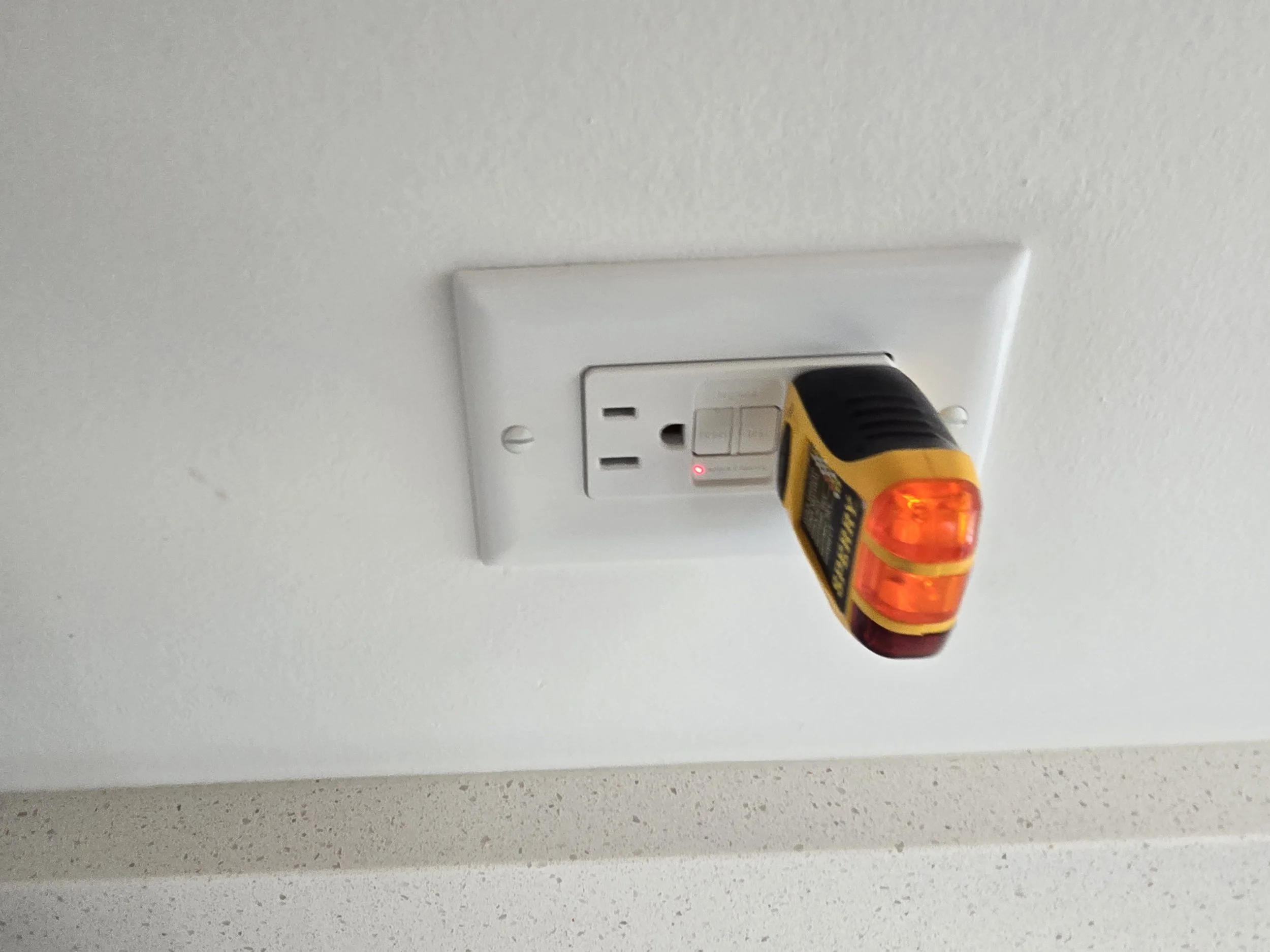
This GFCI outlet appeared to be wired correctly but failed to trip during testing. The red indicator light suggested an internal fault or other condition requiring evaluation and replacement.
During a recent inspection, I found a GFCI outlet that looked perfectly normal.
In fact, when I plugged in my GFCI tester, it initially indicated that the outlet appeared to be wired correctly.
However, when I pressed the test button on the tester...
Nothing happened.
The outlet failed to trip, meaning it did not disconnect power as a properly functioning GFCI should.
The outlet also displayed a red indicator light, which on many GFCI models can indicate an internal fault, a failed self-test, improper installation, or another condition requiring replacement or further evaluation.
(Insert your inspection photo here.)
Caption: This GFCI outlet appeared to be wired correctly, but it failed to trip during testing. The illuminated red indicator light suggested the device was no longer operating as intended and required further evaluation.
This is exactly why professional testing matters.
Simply seeing a GFCI outlet—or even seeing that it has power—doesn't mean it's providing the protection it was designed to offer.
Common GFCI Problems Found During Home Inspections
A GFCI outlet isn't helpful if it doesn't work correctly.
Some of the most common issues I encounter include:
GFCI outlets that fail to trip during testing
Standard receptacles installed where GFCI protection is recommended
Improperly wired receptacles
Damaged or worn outlets
Exterior receptacles lacking proper weather protection
Older GFCIs that have reached the end of their service life
Many homeowners assume they're protected simply because the outlet has TEST and RESET buttons. Unfortunately, appearances can be deceiving.
Why Testing Matters
One of the most important parts of a professional home inspection is verifying that accessible safety devices actually function.
During every inspection, I test accessible GFCI outlets to confirm they respond properly.
A GFCI that won't trip may continue supplying power like a normal outlet, giving homeowners a false sense of security. If it fails during an actual ground fault, it may not provide the protection it was designed to deliver.
Fortunately, replacing a defective GFCI outlet is often an inexpensive repair that can greatly improve the safety of a home.
A Small Device That Can Make a Big Difference
Homebuyers often focus on major systems like the roof, HVAC equipment, or foundation—and those systems are certainly important.
But sometimes it's the smallest items that have the biggest impact on safety.
A properly functioning GFCI outlet is a simple device that can help reduce the risk of electrical shock in areas where water and electricity are present.
For roughly the cost of a pizza, it's one of the best safety investments a homeowner can make.
How Foundation First Home Inspections Helps Protect Homebuyers
At Foundation First Home Inspections, I don't just verify that outlets have power—I test accessible GFCI protection to help ensure these important safety devices are operating as intended.
Every comprehensive home inspection includes an evaluation of the home's accessible electrical system, along with the roof, structure, plumbing, HVAC system, attic, insulation, and other major components.
I also offer advanced services including:
Sewer scope inspections
Infrared thermal imaging
Radon testing
Mold air sampling
Advanced combustion analysis
Drone roof inspections when appropriate
Whether you're buying a home in Algonquin, Crystal Lake, Cary, Huntley, Lake in the Hills, McHenry, Elgin, Barrington, West Dundee, or the surrounding northwest Chicago suburbs, my goal is to help you understand the home's condition and avoid costly—or dangerous—surprises.
Final Thoughts
One of the most valuable safety devices in your home doesn't cost hundreds of dollars.
It costs about $15.
Yet if it isn't functioning properly, you may never know until it's needed most.
A professional home inspection helps identify defective GFCI outlets, missing safety devices, and many other issues before you close on your new home. It's a small investment that can provide lasting peace of mind—and in some cases, help prevent a tragedy.