

When a New Roof Leaks: How an Independent Inspection Identified the Source
A new roof should provide a homeowner with confidence that their home is protected from the elements. But what happens when a newly installed roof begins allowing water into the home?
Recently, Foundation First Home Inspections was called to investigate exactly that situation.
The homeowner had owned the home for nearly 40 years. After decades in the house, they had recently invested in a brand-new roof, hoping to enjoy their retirement in the home they had known for so long.
Instead, the home experienced significant water intrusion following the roof installation.
And this wasn't a leak that had just been discovered.
The water intrusion had been occurring for approximately five months.
By the time I was called, the prolonged water intrusion had resulted in significant damage to numerous components of the home, including areas of the roof decking, insulation, soffits, drywall, exterior sheathing, wall studs, subflooring, carpet, and other building materials.
The effects of the water intrusion extended downward through the affected areas of the home, reaching the crawl space and basement below. Mold was also present in areas affected by the prolonged moisture.
By the time Foundation First Home Inspections arrived, I was the fourth person to investigate the problem.
Three Evaluations and the Source Still Hadn't Been Identified
The first evaluation was performed by the roofing company that installed the new roof.
The second was a municipal inspection.
When water continued to enter the home, the roofing company was called back for a third evaluation. A different condition was identified as the suspected cause of the water intrusion.
However, the water continued to be a problem.
That's when Foundation First Home Inspections was asked to conduct an independent evaluation.
Finding Where the Water Was Actually Entering
When I inspected the roof, I wasn't simply looking for general defects. The purpose of the inspection was to determine where the water was actually entering the home.
After examining the roof and surrounding conditions, I identified the area where the water was entering the home.
I then video documented the condition to verify the source of the water intrusion for the homeowner.
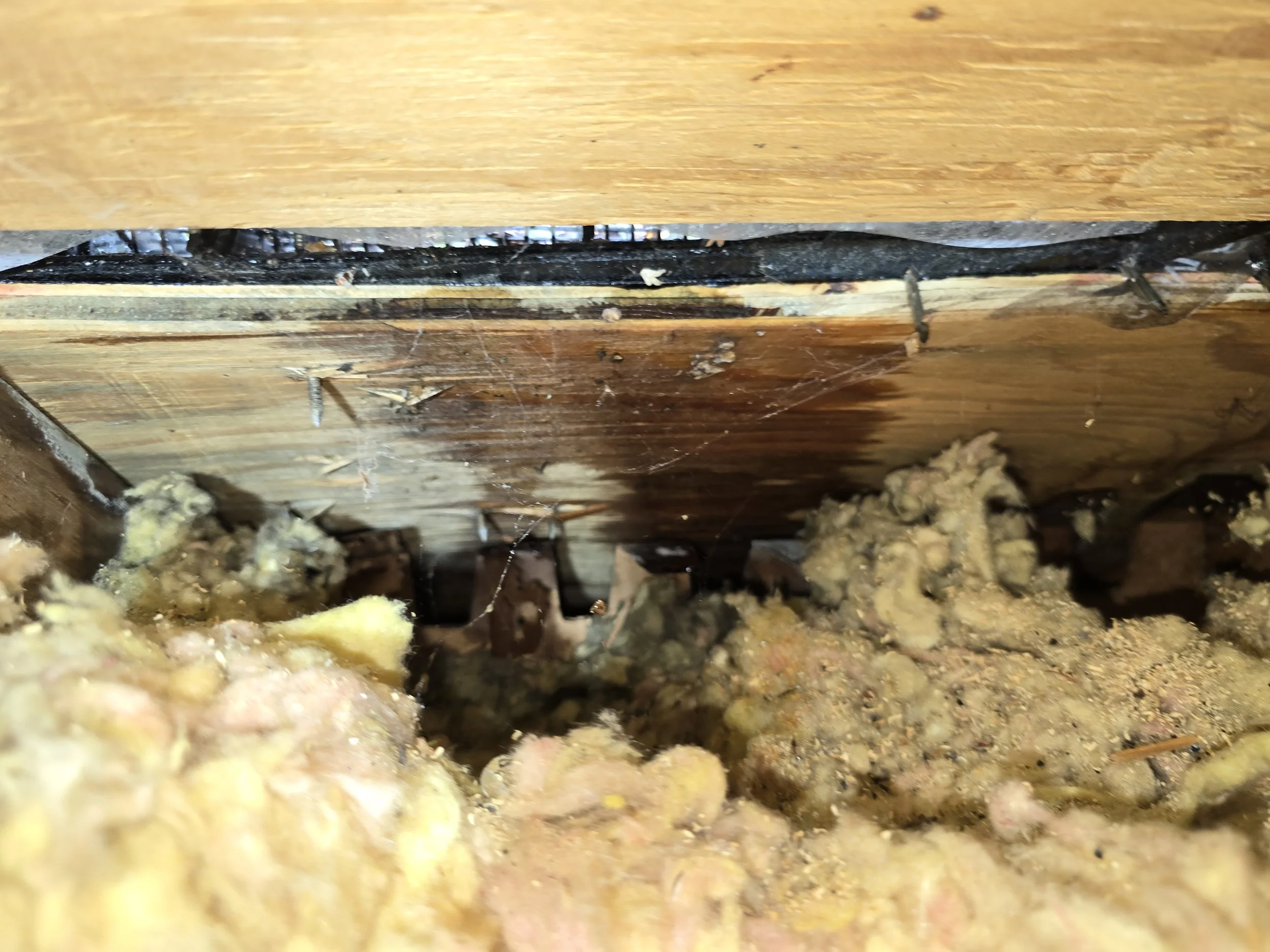
The Problem, improper installation of shingle over intake ventilation strip.
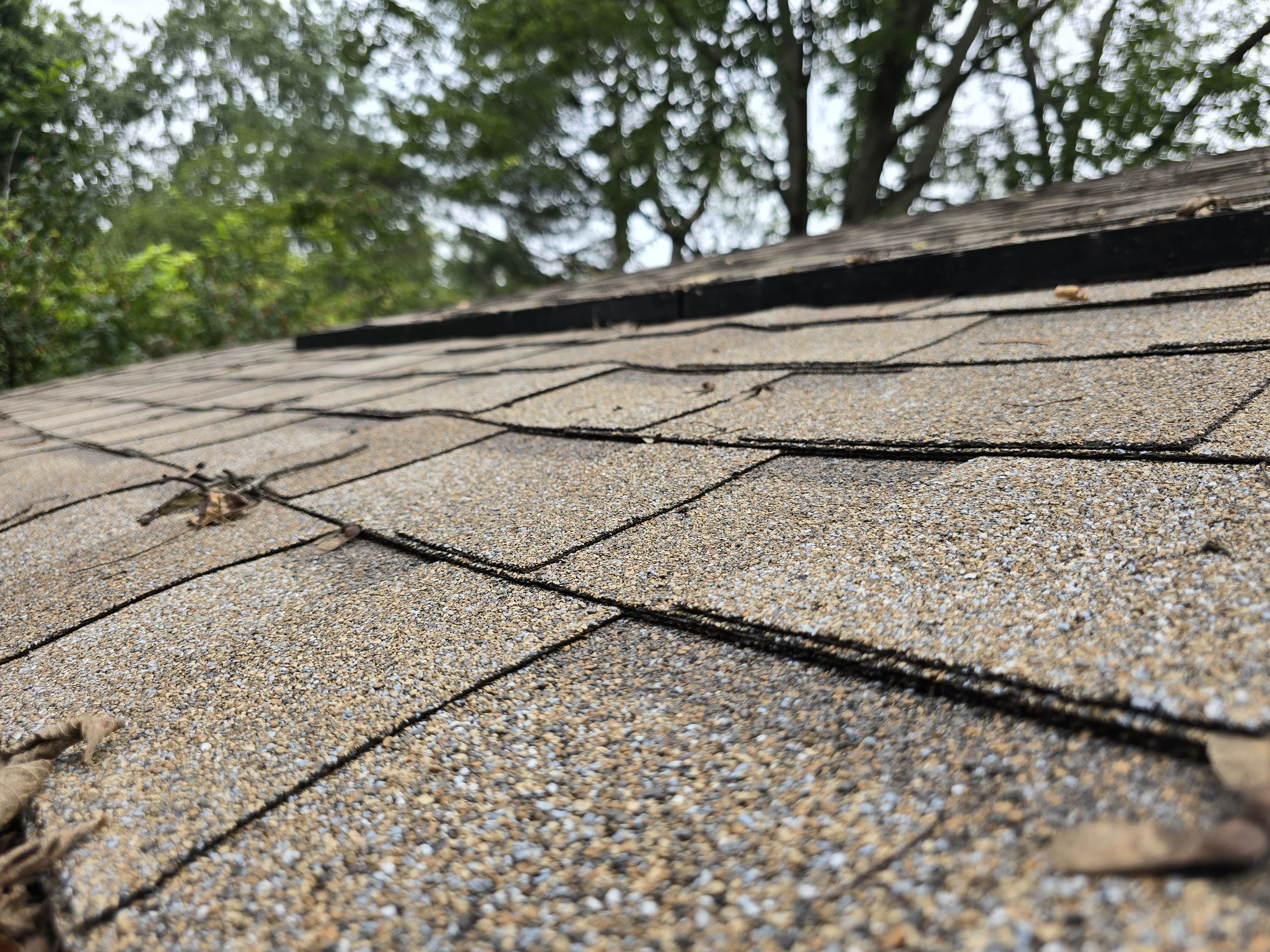
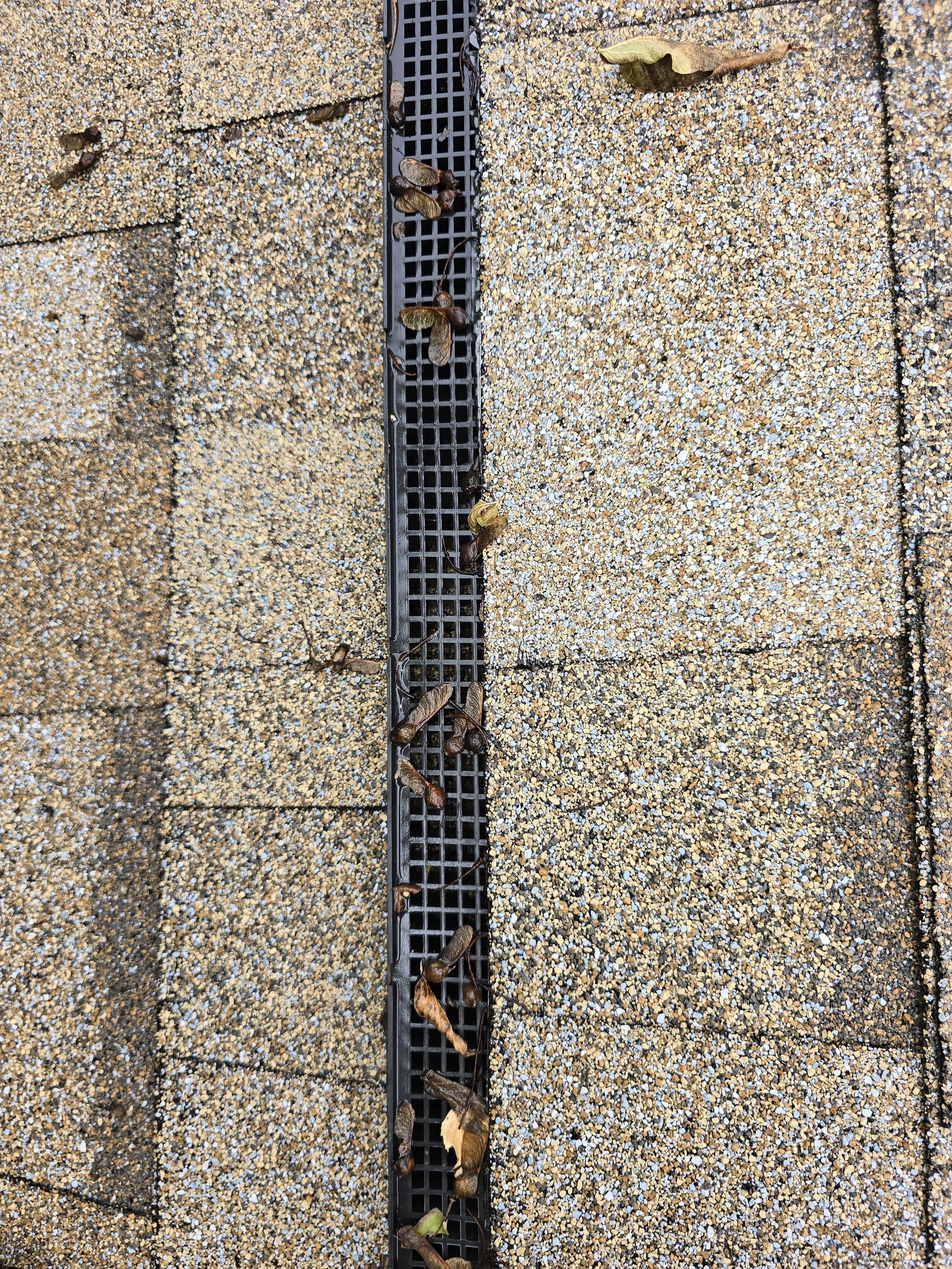
This was important because the homeowner needed more than another opinion. They needed documentation that could help them communicate the problem to the roofing contractor and have the roof repaired.
The video documentation provided the homeowner with visual evidence of the location where the water was entering the home and helped demonstrate the condition that needed to be addressed.
Five Months of Water Intrusion Can Cause Extensive Damage
A roof leak that continues for months can become much more than a roofing problem.
Water that enters through the roof can move through the building assembly and affect materials far beyond the original point of entry.
In this case, the prolonged water intrusion affected numerous components, including:
Roof decking
Insulation
Soffits
Exterior sheathing
Wall studs
Drywall
Subflooring
Carpet
Areas extending into the crawl space and basement
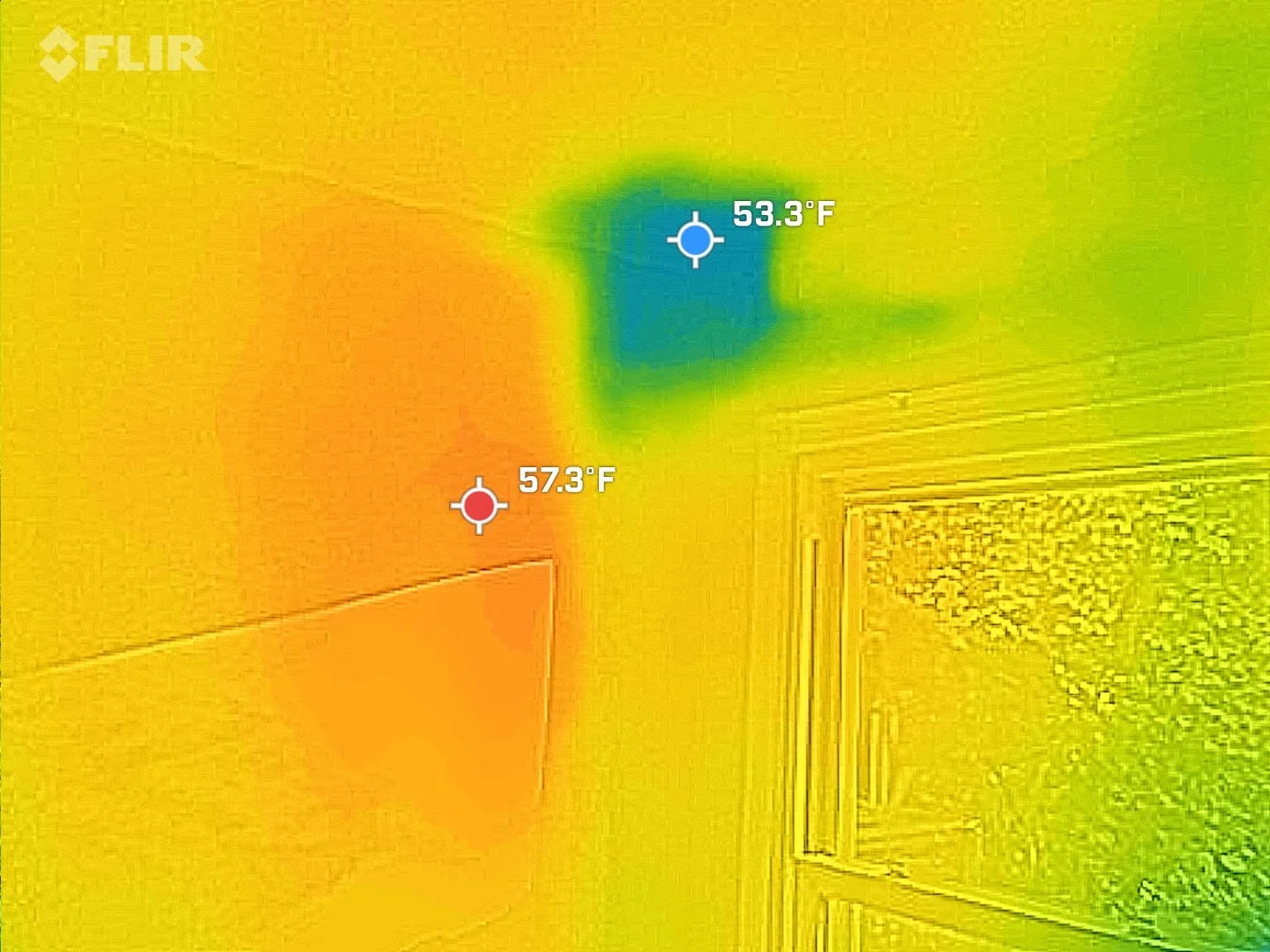
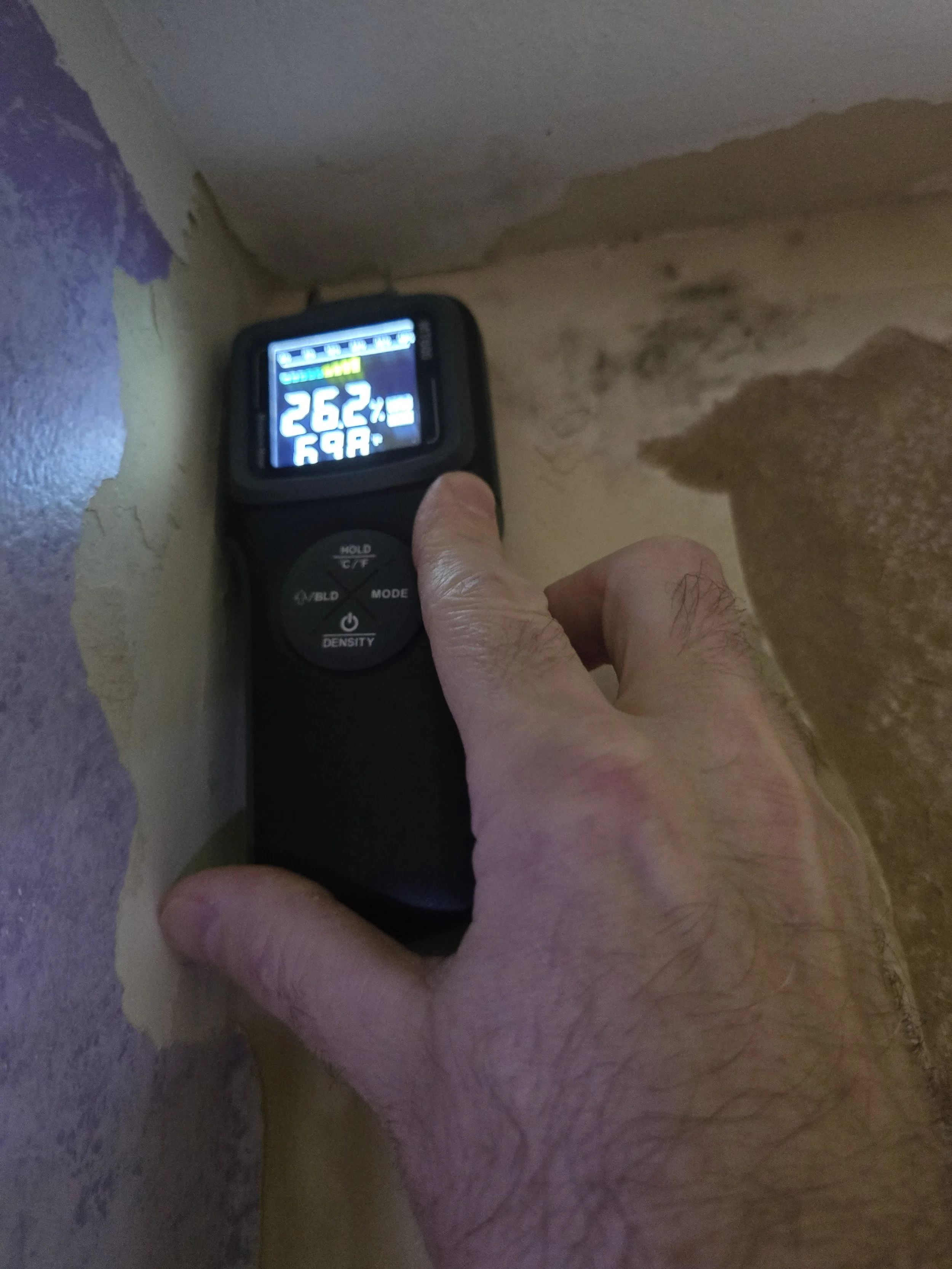
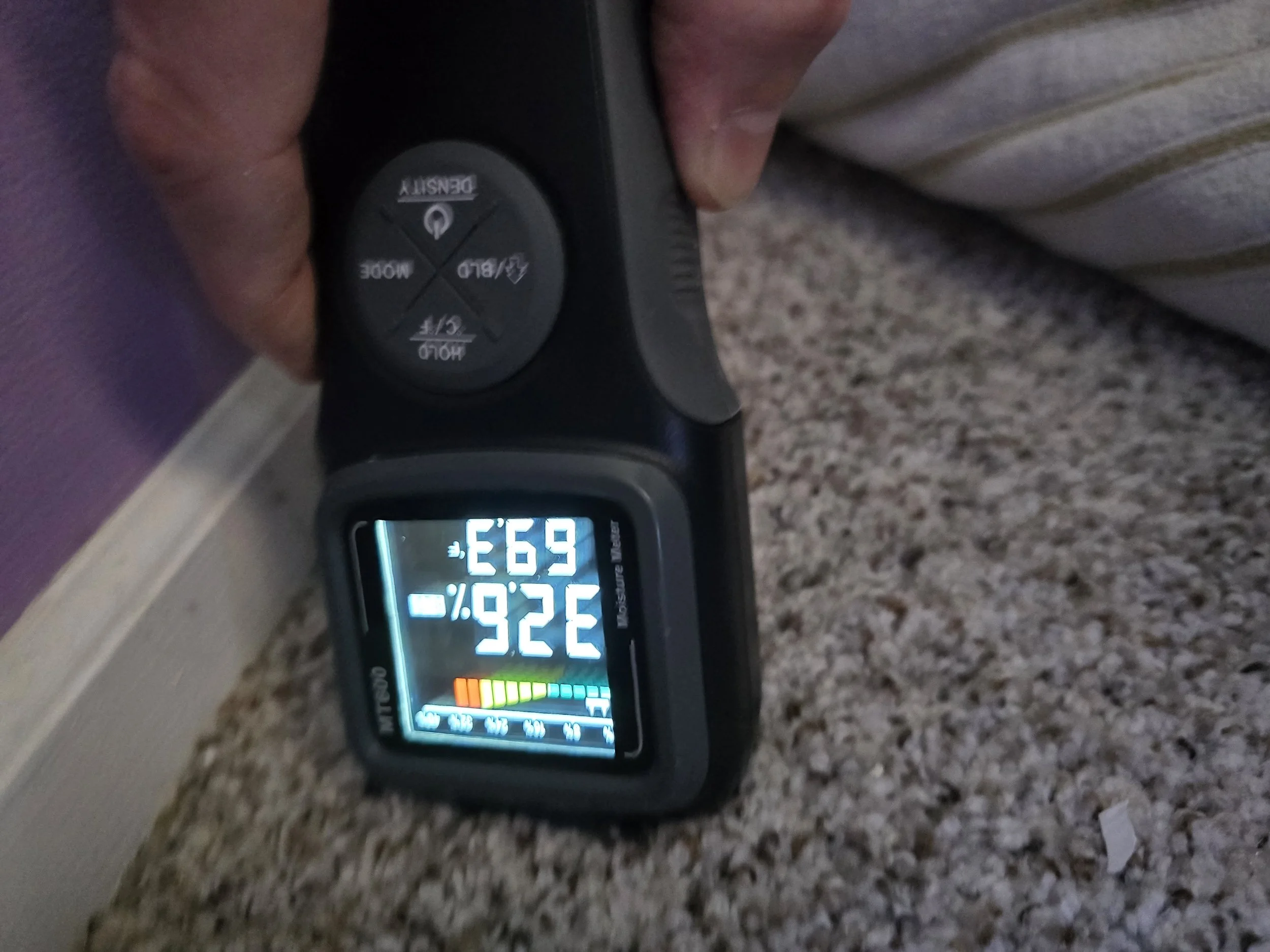
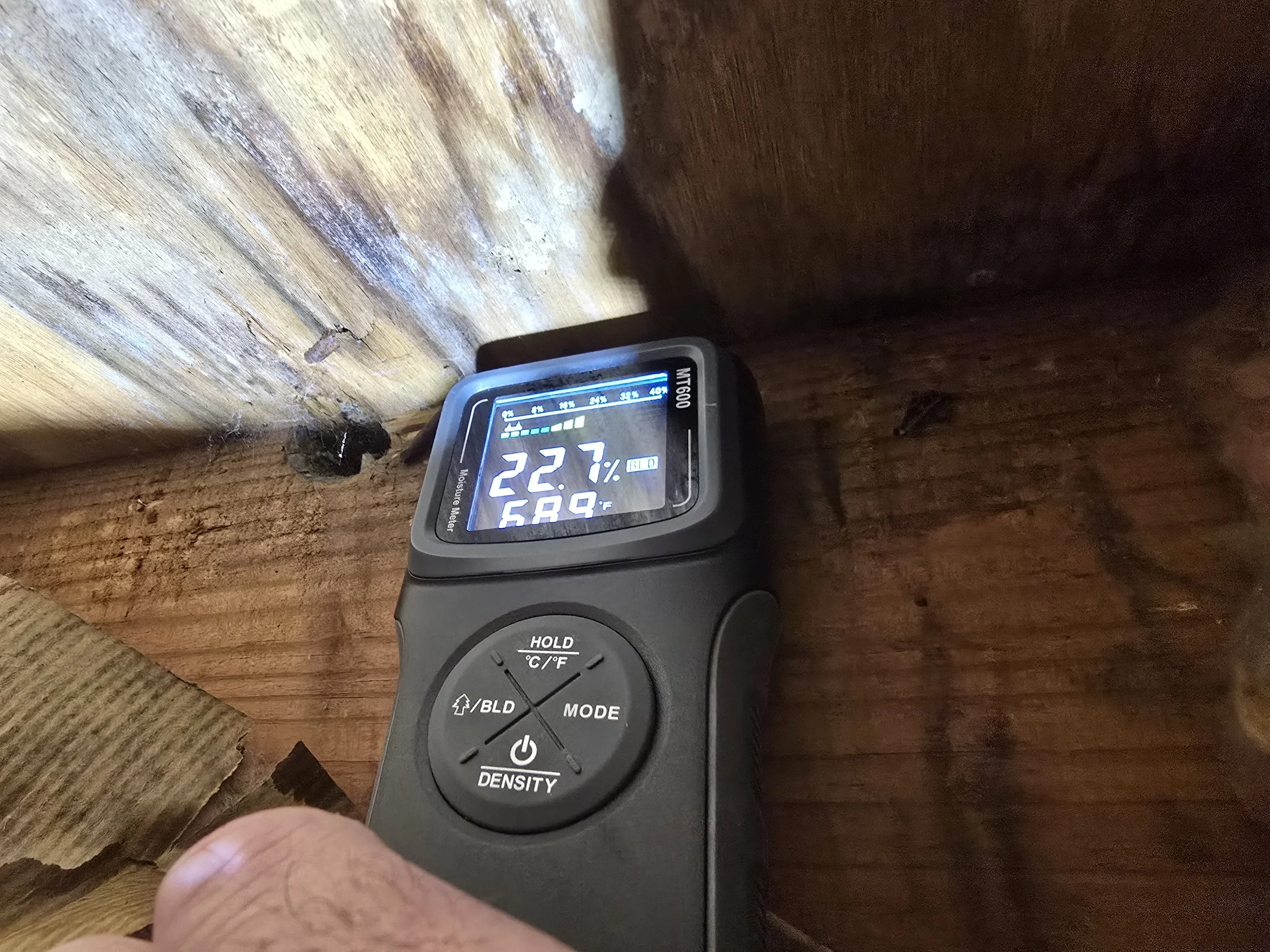
Mold was also present in areas affected by the prolonged moisture.
This is one reason it is important to investigate unexplained water intrusion as soon as possible. What begins as a roof leak can eventually become a much larger building envelope and moisture problem.
A New Roof Does Not Automatically Mean a Problem Free Roof
One of the important lessons from this inspection is that even a brand new roof can have installation related problems.
A roof can look new from the ground and still have significant deficiencies that may not be immediately obvious.
Potential problems can involve:
Flashing
Roof penetrations
Valleys
Transitions
Roofing material installation
Sealing
Drainage
Improperly installed components
Areas where different roofing materials or systems meet
A new roof should be evaluated based on how it was installed not simply on how new the roofing materials appear.
Why Roof Leaks Can Be Difficult to Diagnose
Roof leaks can be particularly challenging because the location where water appears inside the home is not necessarily where it entered the roof.
Once water gets past the exterior roofing system, it can travel along roof decking, framing, insulation, and other building components before becoming visible inside the home.
That means an interior ceiling stain or damaged wall may not be directly below the actual point of entry.
Finding the source requires looking at the roof and building assembly as a system rather than simply looking directly above the visible damage.
In this case, the inspection identified and verified the actual point where water was entering the home.
The Importance of Independent Documentation
When a homeowner is dealing with a significant problem involving a recent repair or installation, independent documentation can be extremely valuable.
In this inspection, I video documented the area where the water was entering so the homeowner had visual evidence they could use when addressing the problem with the roofing contractor.
The purpose wasn't to determine who was responsible for the repair.
The purpose was to document what was happening, identify the source, and provide the homeowner with information they could use to get the problem corrected.
For a homeowner who had owned the property for nearly 40 years and had just invested in a new roof, having that information documented was especially important.
Focused, Limited Scope Inspections
Not every situation requires a complete home inspection.
Foundation First Home Inspections provides focused, limited scope inspections for homeowners who need an independent evaluation of a specific component, repair, installation, or concern.
Whether you're trying to verify that something was installed properly, identify the potential source of a problem, or document visible deficiencies, we can focus the inspection specifically on the issue that concerns you.
Focused inspections may be appropriate for concerns involving:
Roof leaks
New roof installations
Recent repairs
Water intrusion
Electrical installations
HVAC installations
Plumbing repairs
Remodeling or renovation work
Structural concerns
Specific areas of damage
Verification of visible repairs or installations
These inspections allow the scope of the evaluation to be directed toward the specific problem rather than conducting a complete inspection of the entire property.
Sometimes You Need Another Set of Eyes
In this case, the homeowner had already had the roof evaluated three times.
The condition had continued for approximately five months, and significant water and mold damage had developed throughout portions of the home.
It took a fourth evaluation to identify and verify where the water was actually entering the home.
The goal of my inspection was straightforward:
Find the source. Verify it. Document it. Give the homeowner information they could use to get the problem addressed.
That's one of the reasons an independent, focused inspection can be valuable.
You don't always need someone else to tell you that there is a problem.
Sometimes you need someone to determine where the problem actually begins.
Need an Independent Evaluation?
If you've recently had a repair or installation completed and something doesn't appear to be right, Foundation First Home Inspections can provide an independent evaluation focused specifically on the concern.
Foundation First Home Inspections serves homeowners throughout the Chicago Northwest suburbs, including Algonquin, Lake in the Hills, Crystal Lake, Cary, Huntley, McHenry, Elgin, Barrington, West Dundee, South Elgin, Carpentersville, Fox River Grove, Lake Zurich, and surrounding communities.
If you have a specific concern about your home or a recent repair or installation, contact Foundation First Home Inspections to discuss whether a focused, limited-scope inspection is appropriate.
When something isn't right, sometimes the first step is finding out exactly where the problem begins.
written by Keith Barango CPI®