

Mold on Basement Drywall in a Newer Home?
Discovering mold on basement drywall can be frustrating, especially when your home is only a few years old. Many homeowners assume that a newer house should not have moisture problems, but even a relatively new home can develop conditions that allow mold to grow.
Recently, during a mold inspection performed by Foundation First Home Inspections, I evaluated a three year old home where the homeowners could not determine why mold was developing on the drywall in their basement.
The source of the problem was not immediately obvious to the homeowners. My inspection identified a leaking water heater that had been allowing moisture to affect the nearby drywall in the utility room.
This situation illustrates why identifying the source of moisture is an important part of investigating suspected mold problems.
How a Leaking Water Heater Can Cause Mold
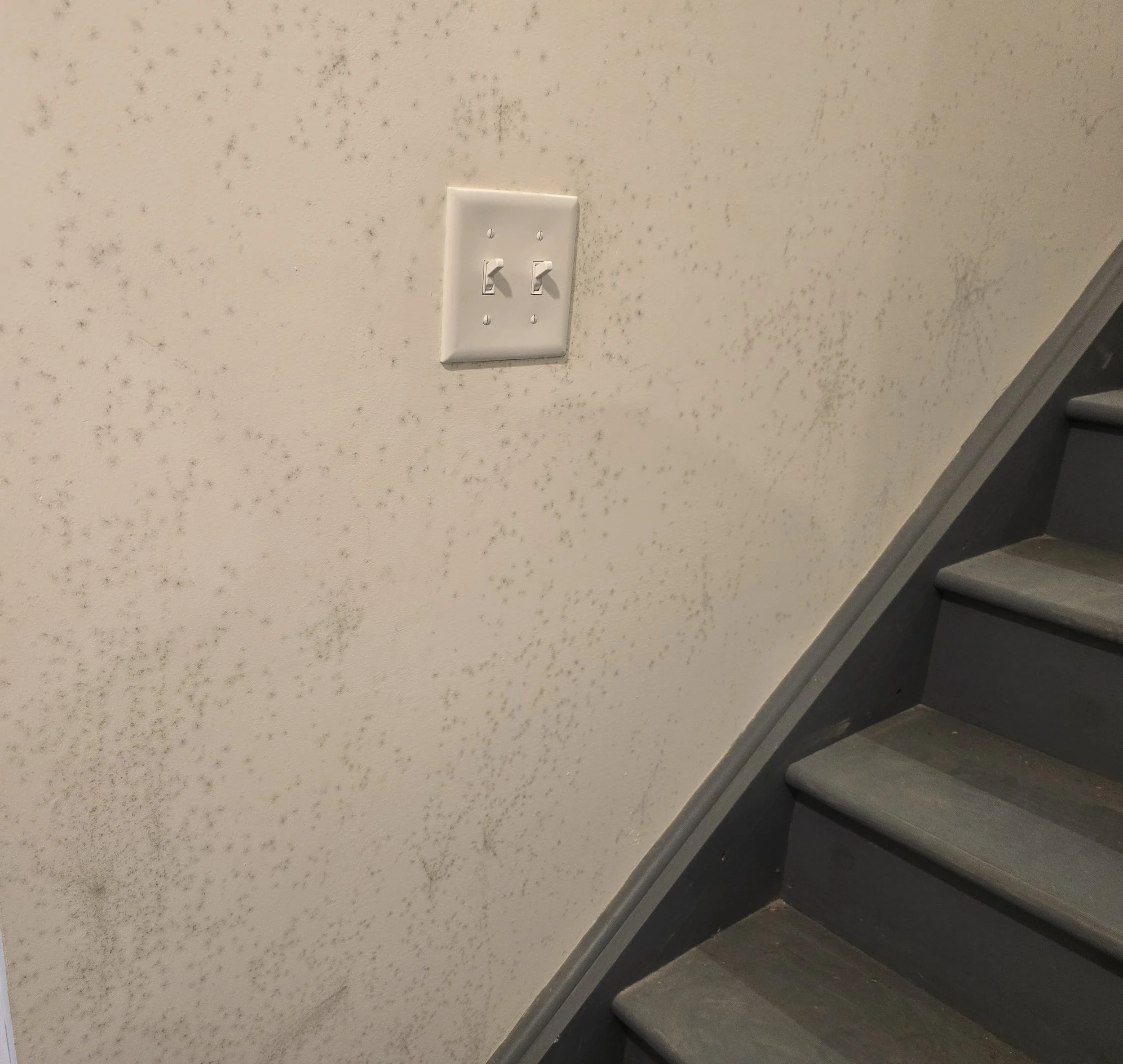
Water heaters are often installed in basement utility rooms near finished walls and other building materials. When a water heater develops a leak, even a relatively small amount of water can create a moisture problem if it goes unnoticed.
Water can accumulate near the base of the unit, contact adjacent drywall, or migrate into nearby building materials. When those materials remain damp, conditions may develop that support mold growth.
The problem can be particularly difficult to recognize when the water heater is tucked away in a utility area that homeowners do not regularly inspect.
In this case, the homeowners knew they had a mold concern but had not identified the leaking water heater as the source of the moisture affecting the nearby drywall.
Why Mold Problems Can Occur in Newer Homes
A home's age does not eliminate the possibility of water intrusion, plumbing leaks, or moisture related damage.
Water heaters, supply lines, drain connections, and other plumbing components can develop leaks regardless of the age of the property. If the leak occurs in a finished basement, moisture may affect drywall and other materials before the homeowner recognizes what is happening.
Other potential sources of basement moisture include foundation seepage, plumbing failures, leaking exterior penetrations, and condensation.
When mold appears in an unexpected location, it is important to investigate the surrounding conditions rather than assume the problem is caused by the basement itself.
Why Identifying the Moisture Source Matters
Mold testing can provide useful information about suspected microbial growth, but laboratory results alone do not identify the source of a water leak.
An effective evaluation considers the visible conditions, the location of the suspected growth, the history of the affected area, and evidence of moisture.
Identifying a leaking water heater provides an important piece of the puzzle because the moisture source must be addressed to prevent continued wetting of the affected materials.
Depending on the extent of the damage, additional evaluation, drying, removal of affected materials, or professional remediation may be necessary.
The appropriate response depends on the actual conditions found in the home.
Professional Mold Inspections in the Chicago Northwest Suburbs
At Foundation First Home Inspections, I help homeowners investigate suspected mold, moisture concerns, and indoor air quality issues.
My approach focuses on identifying observable conditions, investigating potential moisture sources, and helping homeowners understand what the findings mean. When appropriate, laboratory sampling can provide additional information about suspected mold.
Whether you have discovered mold on basement drywall, noticed a persistent musty odor, or are concerned about a possible plumbing leak, a professional evaluation can help you better understand the situation.
Foundation First Home Inspections serves homeowners throughout the Chicago Northwest suburbs, including Algonquin, Lake in the Hills, Crystal Lake, Huntley, Cary, McHenry, and surrounding communities.
Found mold in your basement?
Contact Foundation First Home Inspections at (847) 807-5161 to discuss your concerns and determine whether a mold inspection or indoor air quality testing is appropriate.
An unexplained mold problem may have a hidden source. Identifying the underlying moisture condition is an important step toward addressing it.