

Brand New Home, Real Fire Risk: 151°F at a Light Fixture in the Attic
“It’s Just an LED Bulb”… Until You Measure It
One of the most common assumptions I hear from buyers in new construction homes is:
“Everything should be fine it’s brand new.”
During a recent inspection, I found a condition that looked minor at first glance but told a very different story once tested.
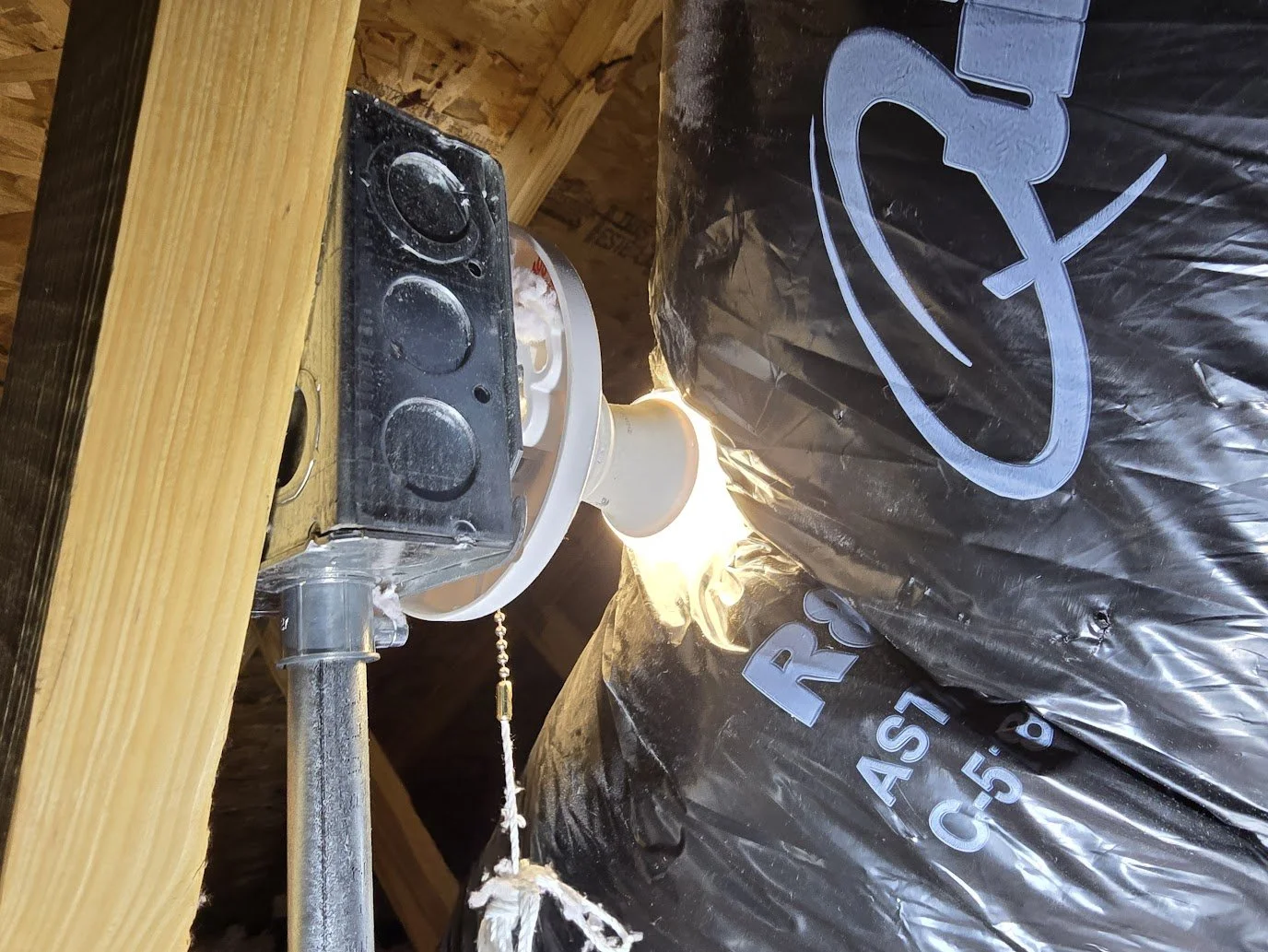
The Defect: Light Fixture in Contact with HVAC Ductwork
In the attic, an LED light bulb was installed in direct contact with a flexible HVAC duct.
This wasn’t just “close” the duct was physically touching the bulb.
At a glance, many would dismiss this because:
It’s an LED (not incandescent)
It’s a new home
There’s no visible damage yet
But that’s exactly why issues like this get missed.
The Test: Thermal Imaging Reveals the Real Story
Using a thermal imaging camera, I checked the temperature after the light had been on for approximately one minute.
Measured temperature: 151.1°F
That’s not theoretical that’s real, observed heat at the point of contact.

Why This Is a Problem (Even With LED)
LED bulbs are more efficient but they are not heat-free.
🔥 Heat Still Has to Go Somewhere
LEDs generate heat at the base (heat sink), and when airflow is restricted, that heat concentrates.
🔥 Duct Materials Are Not Heat Rated
Flexible ducts typically include:
Plastic inner liner
Fiberglass insulation
Outer vapor barrier
These materials are not designed for sustained direct heat exposure.
🔥 Continuous Operation = Compounding Risk
Attic lights are often left on during:
Maintenance
Storage access
Contractor work
That turns a “minor issue” into a long duration heat source in contact with combustible material.
Why This Happens in New Construction
This wasn’t a renovation issue this was a brand new build.
Common causes include:
Trades working independently (electrical vs HVAC)
No final coordination check in tight attic spaces
Municipal inspections focused on code minimums, not system interaction
No one step necessarily “fails” but the end result is still unsafe.
What Could Happen Over Time
If left uncorrected, this condition can lead to:
Degradation of duct insulation
Melting or deformation of materials
Reduced airflow due to duct restriction
Elevated fire risk in attic space
This is exactly the type of issue that:
Doesn’t show up immediately
Gets worse slowly
Becomes expensive or dangerous later
What Should Have Been Done
A proper installation would include:
Adequate clearance between the light and ductwork
Proper fixture placement or relocation
Securing ductwork away from heat sources
Final inspection of trade overlaps
The Bigger Takeaway
This wasn’t a cosmetic defect.
This was a measurable heat hazard in a new home.
Passing inspection at the city level does not mean a home has been evaluated for real world safety conditions.
A professional home inspection looks at how systems interact not just whether they exist.
Buying New Construction? Don’t Skip This Step
If you’re purchasing a new home in the Chicago area , issues like this are more common than most buyers expect.
Catching them early means:
The builder fixes it not you
The risk is eliminated before move in
You avoid hidden long term problems
Schedule Your Inspection
Foundation First Home Inspections provides detailed, real-world evaluations not just surface level checklists.
📞 Call (847)807-5161